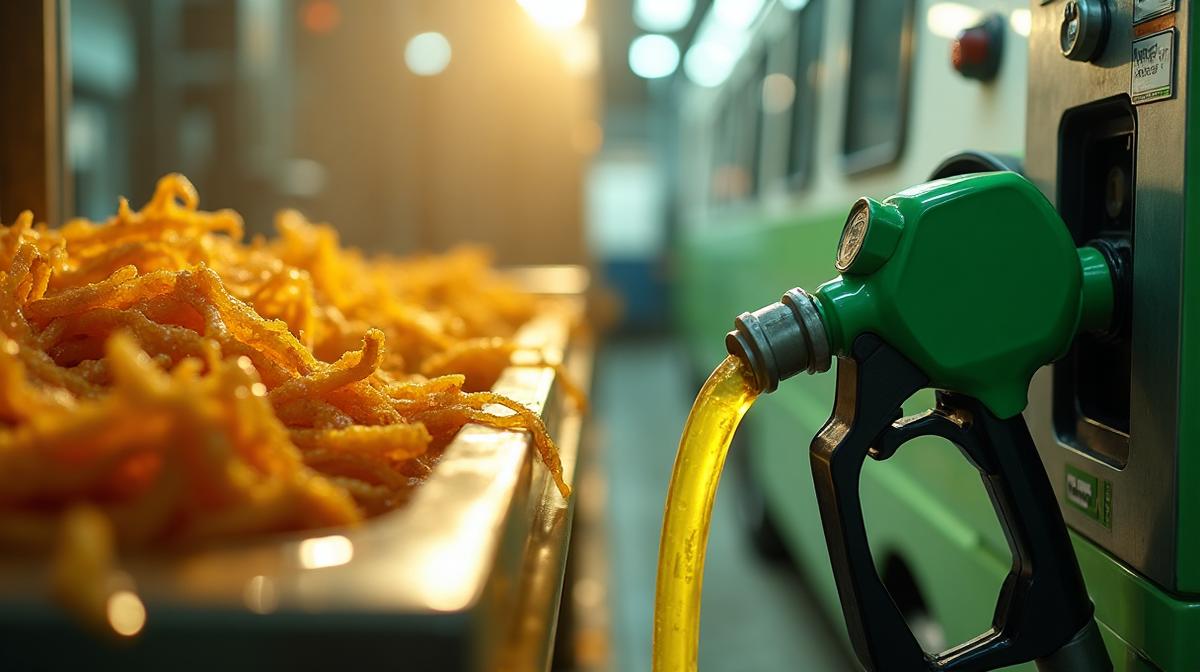
Every time a restaurant, hotel, or food manufacturer disposes of their used cooking oil responsibly, they're contributing to a remarkable transformation. That golden oil that once fried chips or cooked fish becomes clean-burning biodiesel—a renewable fuel helping to power vehicles and reduce the UK's carbon emissions.
But how exactly does used cooking oil (UCO) become biodiesel? In this article, we'll take you through the complete journey, from your kitchen fryer to the fuel pump, explaining the science, the process, and why it matters for our environment.
The Journey Begins: Collection
The transformation starts when your used cooking oil is collected by a licensed waste carrier like Oil Collector. During collection:
- UCO is carefully pumped from storage containers into specialised collection vehicles
- The quantity is recorded for your Waste Transfer Note
- Oil from multiple collection points is consolidated
- Vehicles transport the oil to processing facilities
Collection logistics are optimised to minimise fuel consumption—there's no point creating renewable fuel if the collection process wastes fossil fuels! Learn more about how our collection process works.
Stage 1: Reception and Initial Filtering
When UCO arrives at a processing facility, it first undergoes reception testing and initial treatment:
Quality Testing
Before processing, samples are tested for:
- Free Fatty Acid (FFA) content: High FFA levels require pre-treatment
- Water content: Excess water interferes with the conversion process
- Contaminants: Identifying any unusual substances that could affect processing
Coarse Filtration
The oil passes through mesh filters to remove:
- Food particles (batter, breadcrumbs, etc.)
- Solid debris
- Large impurities
This is why proper UCO storage practices matter—cleaner oil entering the process produces higher-quality biodiesel.
Stage 2: Pre-Treatment (If Required)
Not all used cooking oil is equal. Oil with high free fatty acid content—typically oil that's been used extensively or stored improperly—requires pre-treatment before the main conversion process.
Esterification
In this step, free fatty acids react with methanol in the presence of an acid catalyst (typically sulphuric acid). This reaction converts free fatty acids into biodiesel, reducing the FFA content to acceptable levels for the main process.
This pre-treatment step is crucial for maintaining consistent biodiesel quality, regardless of the varied quality of incoming UCO.
Stage 3: Transesterification - The Main Event
The heart of biodiesel production is a chemical process called transesterification. Here's how it works:
The Chemistry
Cooking oils are triglycerides—molecules consisting of glycerol bound to three fatty acid chains. Transesterification breaks these bonds, separating the fatty acids from the glycerol and replacing the glycerol with methanol molecules.
The Process
- Mixing: Pre-treated oil is heated and mixed with methanol and a catalyst (typically sodium or potassium hydroxide)
- Reaction: At temperatures around 60°C, the chemical reaction occurs over 1-2 hours
- Separation: The mixture is allowed to settle, separating into two distinct layers:
- Upper layer: Crude biodiesel (fatty acid methyl esters - FAME)
- Lower layer: Glycerol (a valuable by-product)
The transesterification process converts approximately 1 litre of used cooking oil into 1 litre of biodiesel, with about 100ml of glycerol as a by-product.
Stage 4: Washing and Purification
The crude biodiesel still contains impurities that must be removed:
Water Washing
Biodiesel is gently mixed with warm water, which absorbs:
- Residual methanol
- Soap formed during the reaction
- Remaining catalyst
- Glycerol traces
This washing process may be repeated several times until the biodiesel is clean.
Drying
After washing, the biodiesel contains water that must be removed. This is typically done through:
- Heating under vacuum to evaporate water
- Or passing through absorbent materials
The finished biodiesel should contain less than 500 parts per million of water.
Stage 5: Quality Testing and Certification
Before biodiesel can be sold, it must meet strict quality standards:
EN 14214 Standard
In the UK and Europe, biodiesel must conform to EN 14214, which specifies:
- Ester content (minimum 96.5%)
- Density and viscosity ranges
- Flash point (safety measure)
- Sulphur content (maximum limits)
- Water and sediment levels
- Oxidation stability
- And many more parameters
Only biodiesel meeting all specifications can be certified for sale and use.
Stage 6: Blending and Distribution
Certified biodiesel is typically blended with conventional diesel before distribution:
Common Blends
- B7: 7% biodiesel, 93% fossil diesel (standard UK pump diesel since 2021)
- B20: 20% biodiesel (popular for fleet vehicles)
- B100: Pure biodiesel (requires compatible vehicles)
End Uses
UCO-derived biodiesel powers:
- HGVs and commercial vehicles
- Bus fleets
- Agricultural equipment
- Marine vessels
- Heating systems
- Generators and industrial equipment
What Happens to the By-Products?
Biodiesel production creates valuable by-products:
Glycerol
The glycerol separated during transesterification has numerous uses:
- Pharmaceutical and cosmetic products
- Food industry applications
- Antifreeze and de-icing fluids
- Biogas production through anaerobic digestion
Potassium Sulphate
Residues from pre-treatment and washing can be processed into potassium sulphate—a valuable fertiliser—creating a truly circular economy.
The Environmental Impact
The complete UCO-to-biodiesel process delivers significant environmental benefits:
- 80% carbon reduction: Compared to fossil diesel over the full lifecycle
- Waste diversion: Prevents oil entering drains and waterways
- Renewable resource: Uses existing waste rather than new raw materials
- Lower emissions: Biodiesel produces less particulate matter, carbon monoxide, and unburned hydrocarbons
Read more about the environmental benefits of cooking oil recycling.
Your Role in This Transformation
Whether you run a small café, a busy restaurant, or a large food manufacturing facility, your used cooking oil can contribute to this remarkable process.
By choosing a responsible collection service, you ensure your UCO:
- Is collected safely and efficiently
- Reaches properly licensed processing facilities
- Is converted into high-quality renewable fuel
- Contributes to UK renewable energy targets
Ready to transform your waste oil into renewable fuel? Request a free quote for used cooking oil collection today.
Oil Collector
The UK's trusted used cooking oil collection service. We help businesses dispose of waste oil responsibly while contributing to renewable energy production.
Learn more about us